

Unpacking services help turn delivered boxes into usable rooms. Home Method Co. describes unpacking and setting up the new home as part of its concierge moving support, along with coordinating the move and removing boxes and packing materials. Before booking, agree which rooms and tasks your own project includes so the plan reflects how you need to live in the new space.
If you’re looking for packing and moving support in Sacramento or Silicon Valley, Home Method Co. moving services is a good place to start the conversation. Tell them how much help you need at the destination. Do not assume that appliance connection, furniture assembly, and every other move-day task are included in an unpacking arrangement.
What unpacking services can take off your list?
An unpacking service takes over the work between the last box coming off the truck and a home you can actually use. Depending on the plan you agree to, it can include:
- Opening moving boxes and setting up rooms
- Placing items where they are needed
- Removing boxes and packing materials, as agreed
- Organizing rooms and planning storage
- Measuring for and arranging organizing products
Whether you are settling into a home in Sacramento, San Jose or Palo Alto, the team will talk through which of these jobs you want to hand over, so you know what’s covered before move day.
How the process works
The process has three steps. First, a free consultation covers the likely duration, the products needed and what you expect from the project. Next comes an action plan, with work days scheduled in blocks of four to six hours. Then the team does the work, keeping communication clear and leaving you able to maintain the system. Some projects can be done in one day, but most stretch into a few days, depending on your belongings and the work you’ve agreed.
Decide what a usable first day looks like
Think about the first evening in the new home. You may need a working place to sleep, clean towels, a few kitchen essentials and the items required for work or school the next morning. Those priorities are more useful than asking for every box to be opened in no particular order.
Write down the rooms that matter first and any household needs that affect the order. A person working from home may need office essentials within reach immediately. A family may prioritize children’s bedding and breakfast items. You can then discuss a sequence that reflects the household rather than the order the truck is unloaded.
Keep a personal essentials bag under your control. Include the things you cannot wait to locate in a carton, such as necessary medications, important documents and everyday devices. An unpacking team should not have to search through ordinary kitchen boxes to find something you need urgently.
Separate opening boxes from setting up rooms
A box can be empty while the room remains difficult to use. Kitchen items might be placed in the nearest cupboard even though that location does not suit how you cook. Clothes might reach the closet without being grouped in a way that makes mornings easier. Explain whether you want basic unpacking, organizing support or both.
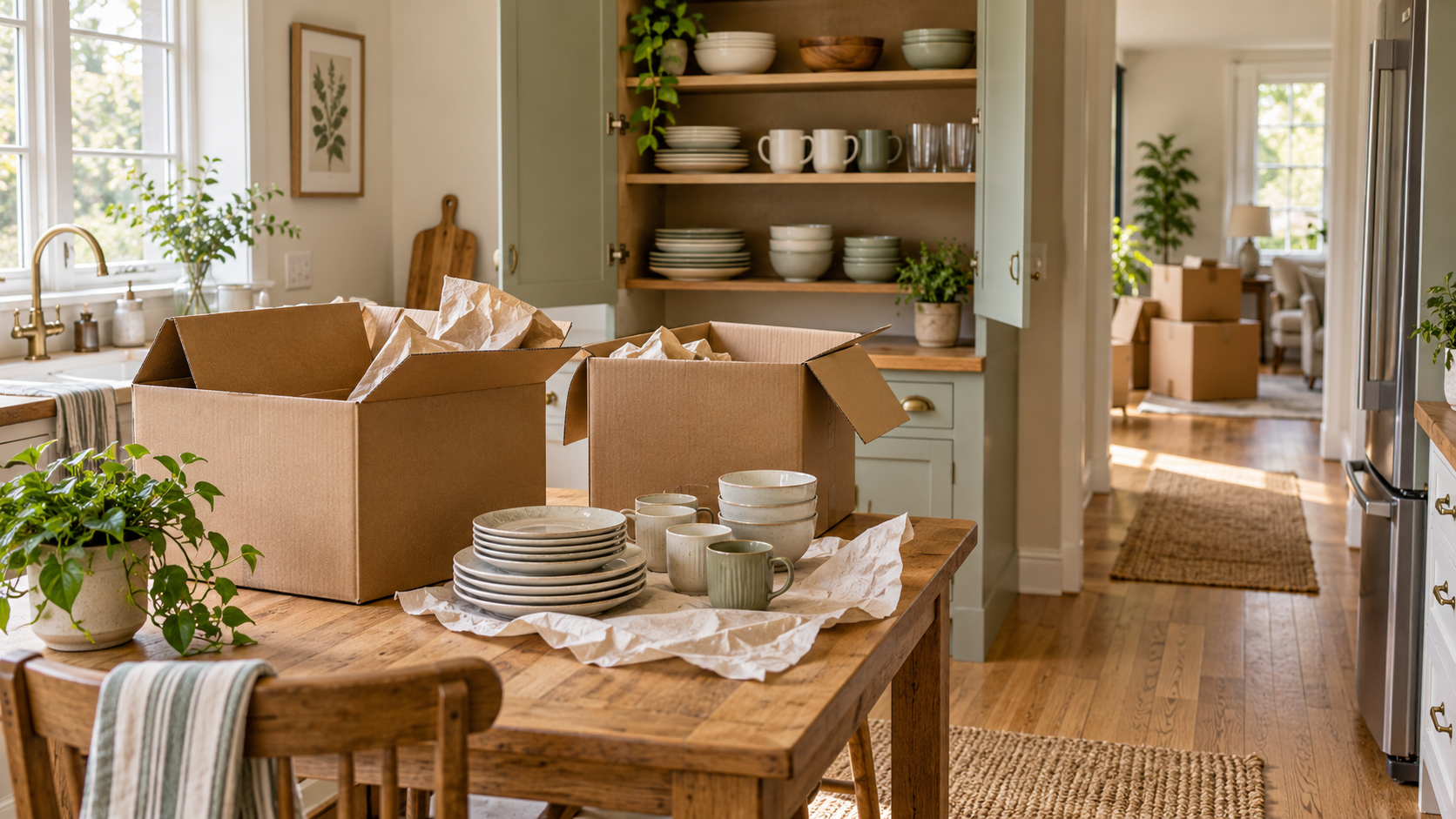
For each room, identify the decisions that need your input. You may already know where the dishes should go. You may want help choosing a workable arrangement. The team needs that distinction before estimating the work involved and planning the day.
Home Method Co. also provides professional home organization. If the move reveals that the new rooms need a different storage plan, discuss that need as part of the scope. A larger pantry, a smaller closet or a kitchen with fewer drawers changes what setting up the room involves.
As you plan, these questions can keep the conversation focused:
- Basic access: which boxes and essentials need to be available first?
- Placement: which items already have an agreed destination?
- Organizing: which rooms need decisions about categories and storage?
- Household decisions: which belongings require your approval before anything changes?
- Separate tasks: what remains with movers, installers or another provider?
Make the handoff between delivery and unpacking clear
Confirm when the home will be accessible and when boxes are expected to arrive. Let the team know about any building access arrangements that apply to your move. These are details to verify for your property, not assumptions about every apartment or neighborhood.
It also helps to ask who is responsible for each task between the truck and a finished room. For example, where will cartons be placed? Who will handle furniture that is not yet positioned? What should happen if delivery is delayed? A written scope reduces the chance that several people expect someone else to take care of the same job.
Share enough information to plan the work
Photographs of the current rooms, a basic destination layout and a list of priorities can make the conversation more specific. Mention large collections, fragile belongings or unusually full cupboards. These details affect the amount of sorting and placement involved even when two homes have the same number of bedrooms.
Be honest about undecided belongings. If several boxes contain things you have not yet chosen to keep, the unpacking plan needs room for those decisions. The team’s stated approach is that nothing is discarded without permission. You do not need to make every decision in advance, but the team should know where choices are still open.
You also do not need to buy organizing products first. Their team’s process includes measuring and sourcing products. The destination’s actual shelves and drawers should guide those choices. An insert that fits the old kitchen may not fit the new one.
Agree on what happens at the end of the session
Ask how the agreed work will be reviewed with you. It is useful to know where everyday categories have been placed and what remains unfinished. If you are not present for the whole session, decide how placement questions will be answered so the team isn’t left waiting on basic decisions.
Since the moving support includes hauling away boxes and packing materials, confirm when that happens in your project and where materials should wait during setup.
If time is tight, start with the rooms that make the household functional, then agree how the remaining work will be handled.
Prepare the decisions, not a perfect-looking house
A useful unpacking plan tells the team what matters, what is arriving and which choices require you. It does not require a magazine-ready starting point. The boxes and current problem areas show what needs to be solved.
Start with the destination rooms and the tasks you want taken off your list. Then ask the team to confirm the service scope and planning steps. You will be arranging help around the actual move, with a clear understanding of what the team will do and what still needs another arrangement.
Ready to hand over the unpacking? Schedule a free consultation with Home Method Co. to talk through your rooms, timing and the setup you need, whether you are moving within Sacramento or to San Jose, Palo Alto or elsewhere in Silicon Valley.