

The cost of a packing service depends on the work being planned: how many belongings you have, which rooms are involved, how many fragile items need care and how much help you want. A bedroom count alone can’t tell you how much packing a household really needs.
Packing costs can vary quite a bit, even between homes with similar layouts, depending on the amount of belongings and the level of help needed. If you’re preparing for a move in Sacramento or Silicon Valley, factors like these are worth discussing during the planning process. Home Method Co.’s moving services offer a starting point for exploring your options and discussing the details of your move.
Why Two Homes Can Need Very Different Packing
Here’s what tends to make one task different from the next:
- Belongings, not just rooms: how much you own in each space
- Fragile or awkward items: anything that needs extra care
- Sorting: whether decisions still need to be made before packing
- How much help you want: the whole home, or just the kitchen and breakables
- Timing and access: when packing can happen and how the property works
- Help at the new home: whether unpacking is part of the plan
Count the belongings as well as the rooms
Two homes with the same floor plan can contain very different amounts of work. One kitchen may have a small everyday set of dishes. Another may hold several sets, small appliances, serving pieces and a full pantry. Labels like “kitchen” and “two bedrooms” don’t capture that difference.
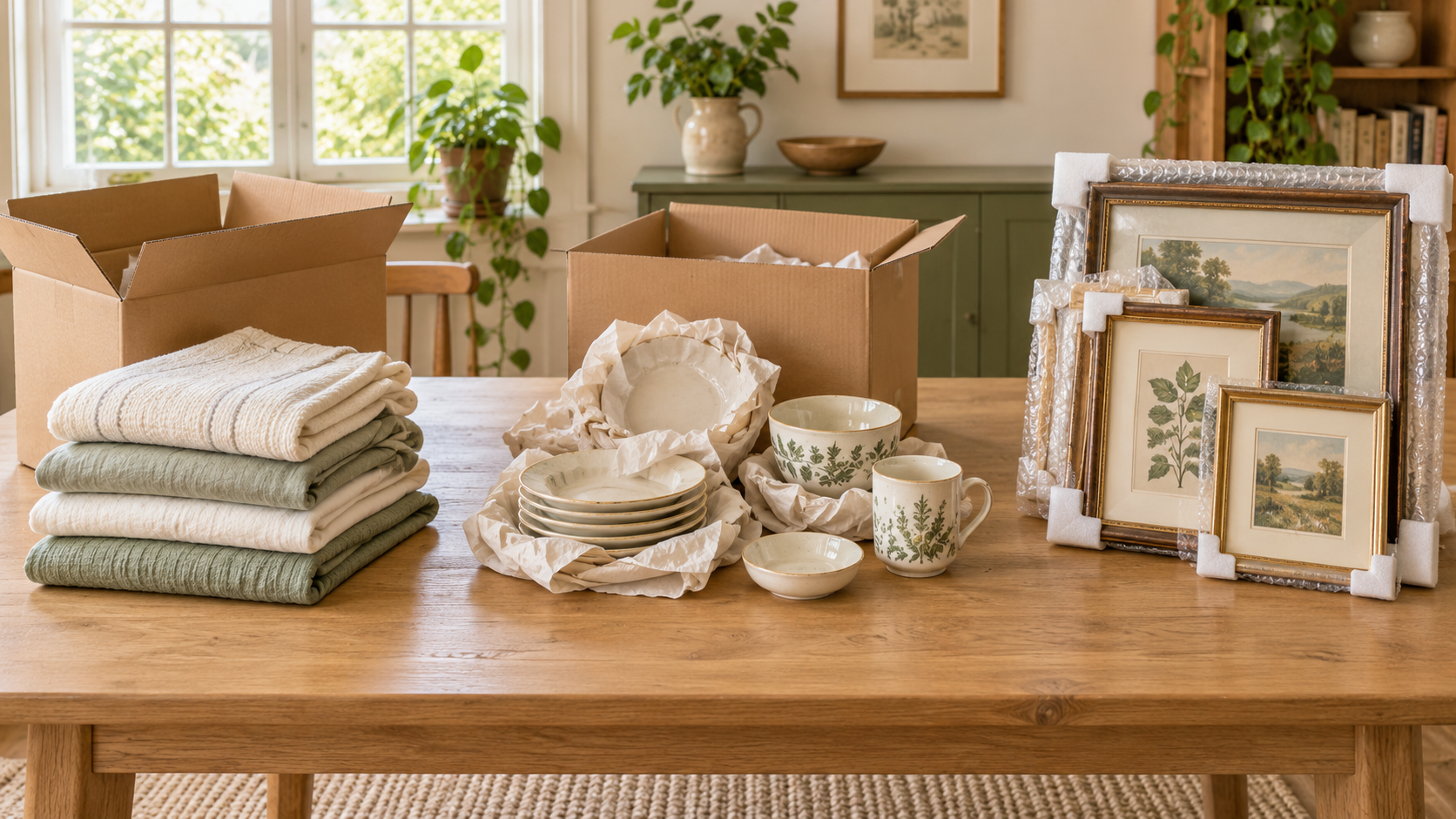
Make a room-by-room inventory at a useful level of detail. You do not need to list every spoon. Note cupboards that are especially full, large collections and spaces that are easy to forget, such as a hall closet or garage shelves. Photos can help explain the volume more clearly than a rough guess about boxes.
Include the areas you plan to pack yourself. If you want help only with the kitchen and breakables, say so. If you need support throughout the home, say that just as clearly.
Point out the items that need extra care
Fragile and awkward belongings need to be discussed before the team arrives. Describe the items rather than assuming that a general packing arrangement covers every object. Artwork, unusual collections and large delicate pieces may require particular handling or another provider. Ask who will take responsibility for them.
This is also the moment to decide what you’ll carry yourself. Keep essential documents, valuables and personal necessities separate from the ordinary packing plan. Tell the team which items should remain accessible and which should not be packed.
You don’t need to buy packing materials ahead of time. Ask what materials are included, what must be supplied and how special items will be handled.
Decide how much sorting comes before packing
Packing is a different job when every cupboard still needs decisions. You might want everything packed just as it is. You may want to reduce belongings first. Or you may be halfway through and need help with what’s left.
Home Method Co. also offers professional home organization. Discuss whether sorting and organizing support belongs in the move plan. The team just needs to know whether to leave time for decisions as well as boxes.
There is no need to hide the undecided piles. Nothing is thrown away without your permission. Share which categories are settled and which still need your input so the work can be planned honestly.
Share your timing and access details
Tell the team when packing can start and when everything needs to be ready for the mover. Mention any access conditions that apply to the property, such as an arranged entry time or a building's move procedure. Confirm those with whoever is responsible rather than assuming they’ll sort themselves out.
Also explain whether the household will continue using the kitchen, bedrooms or work area while packing happens. Some things need to stay out until later, and knowing early saves the team from reopening boxes for daily essentials.
If your dates are still uncertain, say so at the start. A tentative schedule should remain clearly tentative until the relevant arrangements are made.
Ask what the plan covers
A good plan makes clear which rooms and tasks are covered. Ask about the preparation expected from you, the work the team will perform and anything that remains with the mover or another provider. Questions worth asking:
- Which rooms and storage areas are included?
- Will the work include sorting, packing or both?
- How will fragile or unusual items be handled?
- What supplies are included or need separate arrangements?
- Which personal items should stay with the household?
- What happens if the scope changes?
Packing, transport and setup at the new home are separate jobs, so ask about each one. Ask specifically about unpacking if you want help at the new home as well.
Bring real information, not a box count
Before your first conversation, gather a few current photos, a short list of the rooms involved, your move timing and anything that needs special care. That’s far more useful than guessing the number of cartons from an online calculator.
The process starts with a conversation about duration, products and expectations, then an action plan, then the work itself. That’s how Home Method Co. works. Project length varies, so use that first conversation to say what you want taken off your list and what you’ll handle yourself.
Ready to talk through your move? Schedule a free consultation with Home Method Co. and bring your photos, your rooms, your timing and the help you’d like, or call (916) 471-4323. The team helps with moves in Sacramento, San Jose, Palo Alto and across Silicon Valley.