

Picture the first morning in a new home: the closet is empty, several boxes say “clothes,” and the shirt you need could be in any of them. This is a common packing problem you can plan around. Knowing how to pack clothes for moving includes deciding what should be easy to find at the other end.
Whether you are moving across Sacramento or between Sacramento and Silicon Valley, keep each person's clothing grouped, separate the first few days' essentials, and pack around the destination rooms. That gives you a useful order for unpacking when the rest of the house still needs attention.
Quick answer: Set aside first-days clothing, pack clean and dry garments by person and category, and use containers suited to how the items need support. Label each box with its destination and contents. Unpack daily clothing first, then arrange the rest around the new storage space.
Separate what you need before the boxes arrive
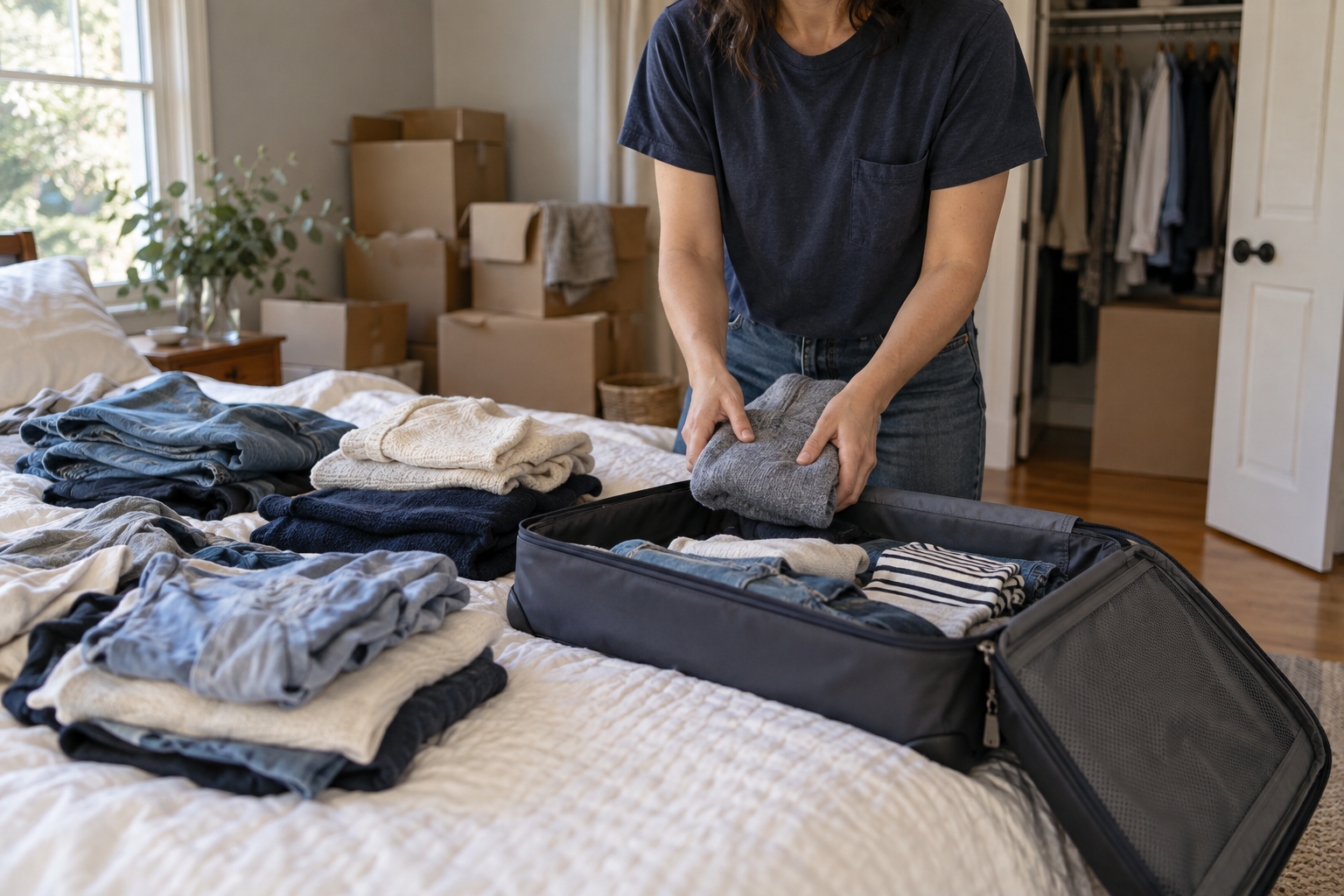
Choose a small selection of clothes for moving day and the days immediately after it. Include sleepwear, underwear, comfortable layers and anything required for work or school. Keep footwear with this plan, even if the shoes will travel in a separate compartment.
Use a suitcase or clearly separate bag for these essentials. Put it with the belongings staying under your control rather than in the general packing area. A box marked “open first” still creates a problem if it is loaded deep into the moving shipment and unavailable when needed.
Think about the actual schedule. If there may be time between leaving the old home and getting access to the new one, allow for it. A move that includes temporary accommodation needs a different clothing selection from a same-day local move. Build in a little buffer in case a handoff runs late.
For the remaining clothes, work person by person and category by category. Keep decisions about repairs, donations or items you no longer want separate from packing. Take your time with those decisions, even with a box open. Give anything you are still deciding on its own clearly marked spot so it stays out of the donation bag.
| Clothing group | Packing priority | What makes unpacking easier |
|---|---|---|
| First-days essentials | Keep accessible outside the main shipment | One separate bag per person |
| Regular hanging clothes | Preserve useful groupings | Destination closet noted on the carton |
| Folded everyday clothes | Keep categories together | Specific contents listed on the box |
| Occasional or seasonal items | Pack earlier if not needed | Mark as lower unpacking priority |
| Delicate or special garments | Follow garment-specific care | Identify handling needs without crushing |
If sorting and packing have become too much to manage alongside the move, Home Method Co.'s packing services can support the transition.
Match the packing method to the garment

Pack clothing clean and fully dry. Check pockets before anything goes into a box, and keep laundry that still needs attention clearly separate. Let anything damp dry completely before it goes in with clean garments, even for a short move.
For clothes that normally hang, a suitable wardrobe carton can preserve their grouping. United Van Lines' packing-supplies guide describes wardrobe boxes with a hanging bar for transferring clothing directly from a closet. Select a height that allows the garments to hang without being crushed against the bottom.
Keep folded garments in manageable containers. Group shirts with shirts or keep an existing drawer category together when that layout makes sense for the new home. A box containing one clear category is easier to unpack than one filled with unrelated items because they happened to fit.
Heavier clothing can make a large carton surprisingly difficult to handle. Split dense items across suitable boxes rather than filling the largest container available. U-Haul's clothing-packing guide recommends placing heavier garments below lighter ones. Keep the overall weight manageable and follow the container's limits.
Separate shoes from clean fabric so soles and hardware cannot mark it. Protect special garments according to their care needs. A wedding dress, embellished jacket or delicate knit may need more consideration than an everyday T-shirt, so let its care instructions guide the packing.
A few practical methods cover most wardrobes:
- Suitcases and duffel bags: pack folded clothes in them, since they are containers you already own.
- The garbage-bag method for hanging clothes: keep a group on its hangers, pull a large bag up from the bottom, and tie the bag around the hooks at the top.
- Vacuum-seal bags: great for bulky, seasonal items such as coats and bedding, though they are not ideal for delicate fabrics or long storage.
- Rolling vs folding: roll T-shirts and casual wear to save space, and fold shirts and structured items.
- Dresser drawers: leave clothes inside only if your movers agree and the drawers are secured, and settle it before packing day.
Label for the room and the unpacking task

“Clothes” is a start, but it rarely gives enough information when several people share a move. Use the destination room, the person and a useful category. “Main bedroom: everyday shirts” or “Second bedroom: school clothes” tells you much more when deciding which box to open.
Put the label on a side you can see when boxes are stacked as well as on top. A simple numbering system can help if there are many cartons. Keep any more detailed inventory in one place, so the numbers are easy to look up.
- Use destination-room names that everyone involved understands.
- Keep each person's clothing groups distinct where practical.
- Note the category instead of using only the word “miscellaneous.”
- Mark lower-priority seasonal clothing clearly.
- Keep first-days bags visibly separate from packed cartons.
If the new rooms do not have obvious names yet, agree on a simple description such as “upstairs front bedroom.” Consistent wording is more useful than an elaborate color system that only one person understands. Color works well alongside the written labels.
Keep clothing boxes for clothing, even when there is a gap to fill. Toiletries can leak and small household objects get lost among folds, so clear categories mean opening a clothing carton never turns into another sorting project.
Leave a brief note for anything packed differently from the usual plan. If one person's winter coats have to share a carton with another person's coats, record that. Exceptions are easy to forget during a move, especially when several people pack at different times.
Unpack in the order the new home needs

Start with the clothes you need for the next normal day. Put the first-days selection somewhere accessible, then move on to the main everyday categories. The household can run smoothly while the rest of the closet waits its turn.
Inspect the new storage before filling it. Shelf depth, drawer size and hanging height may differ from the old home. A category that filled one drawer previously may need a different position now. Arrange things for the new space, with frequently used clothes within easy reach.
Unload hanging clothes in their established groups, then adjust the order around the new closet. For folded clothes, complete one useful drawer or shelf at a time. This gives you working sections without covering every surface with open piles.
Set aside empty packing materials as you go, checking them before disposal. Small accessories can hide in paper or at the bottom of a carton. Keep walkways clear and stacks low and steady as you go.
Leave occasional and seasonal items until the daily categories have a place. That order prevents rarely used garments from taking the easiest shelves simply because their boxes were opened first. It also gives you a clearer view of how much room remains.
Take note of any arrangement that creates extra effort during the first week. If the clothes you use most keep ending up on a chair, the drawer may be crowded or awkward to reach. Adjust the setup while the move is still fresh rather than treating the first layout as permanent.
Plan the packing and setup together
Packing clothes with unpacking in mind can reduce repeated sorting and make the first days easier. Keep useful groups intact, identify where they belong and allow the new home's storage to guide the final arrangement.
Home Method Co. provides moving support and home organizing in Silicon Valley, alongside its Sacramento service area. Book a free consultation to plan your move. There is no need to tidy first or buy storage products: the team handles organizing-product planning, and decisions about what stays or goes remain yours.