

Toy organization is not hard to do once. Most families I work with have done it three or four times already. It is hard to make it last, and the reason is almost always the same: the system has more categories than the people using it can keep track of.
A four year old cannot sort toys into eleven categories, and neither can a tired adult at nine at night. So here is the version that holds up, and most of it is about having fewer categories.
The quick version: gather every toy into one room, sort by type of toy, cut it down to five or six categories, store each category where the kids actually play with it, and move the overflow out to the garage. Then do a five minute reset at the end of the day.
Gather every toy into one room first
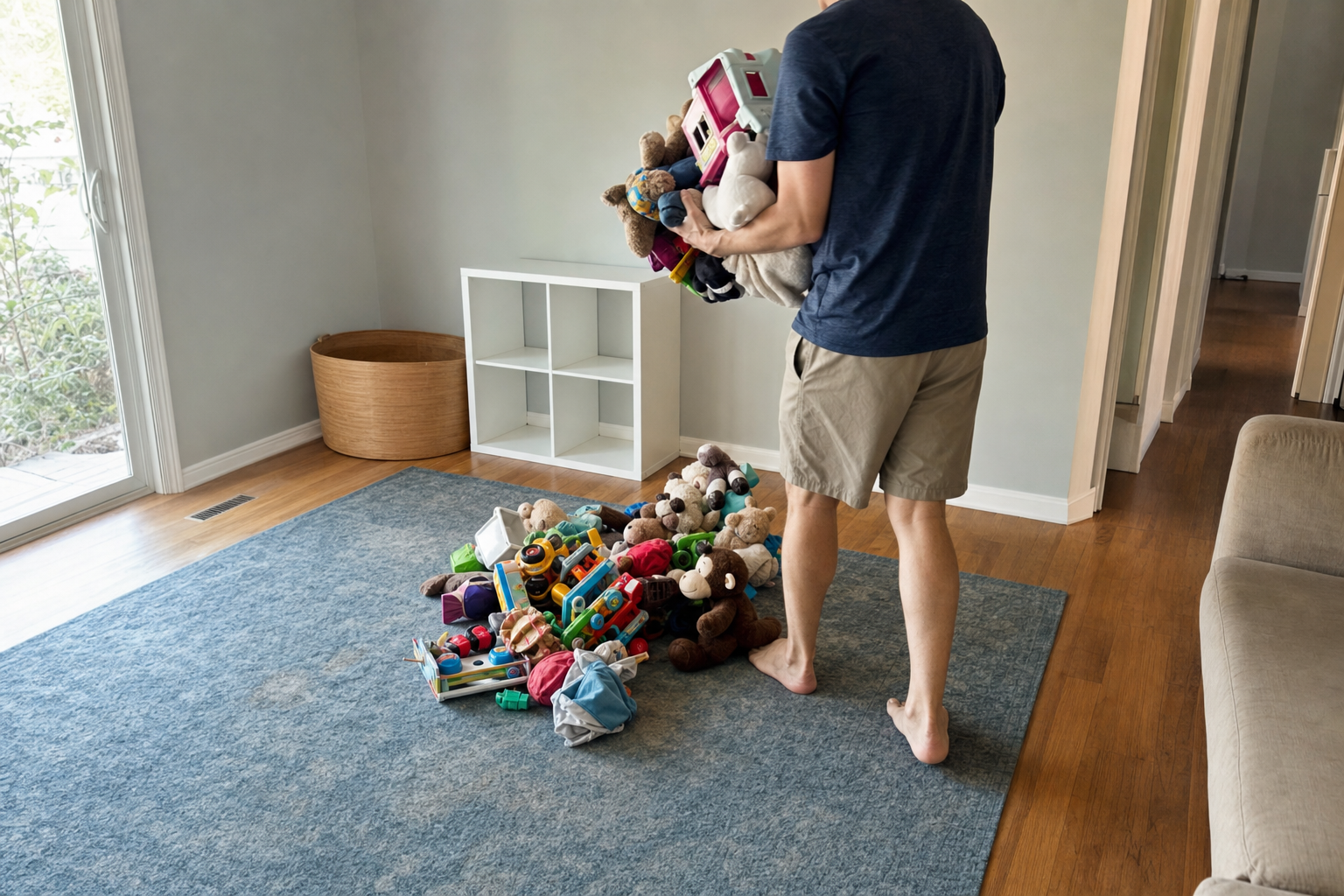
Walk the whole house and bring every toy into one place. The bedrooms, the living room, the car, under the sofa, the bottom of the coat closet. Put it all in one pile.
Families are almost always surprised by the size of the pile, because toys spread out into six rooms and no single room ever looks that bad on its own. You cannot decide how many bins you need until you can see the whole thing at once, and you cannot tell what is duplicated either.
Sort by type of toy
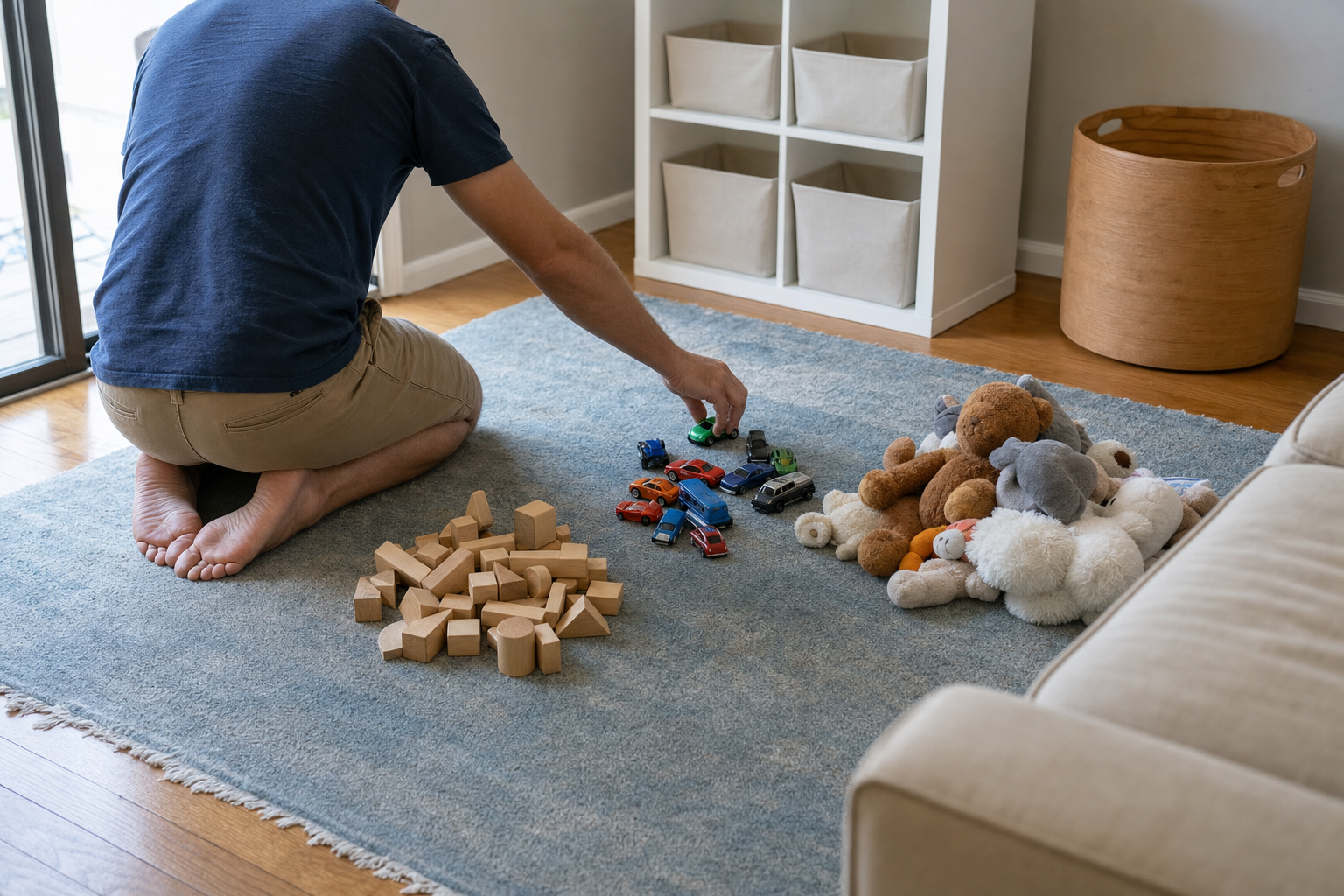
Sort the pile by what the toy is, not by which child it belongs to. Blocks together, cars together, art supplies together, stuffed animals together. Siblings share more than anybody admits, and sorting by owner means the same category ends up in two rooms and neither child can find the whole set.
Pull out the broken things and the pieces that belong to a game you no longer have as you go. Do not stop to fix anything. Put the broken pile by the door and deal with it after.
If your children are old enough, have them in the room for this part. Something they hand over themselves stays gone. Something you remove while they are at school usually finds its way back into the house within a month.
Keep the categories down to five or six
This is the step that decides whether the whole thing survives. Once you have your groups, combine them until you are down to five or six. Small building things can share one bin. All the art supplies can share one. Every soft toy can share one.
Five bins a child can use is better than twelve bins that look neater on the shelf. Every extra category is one more decision at cleanup time, and past about six, kids stop sorting and just put things in the nearest open bin. Adults do the same thing. Fewer, larger categories with a bit of room to spare in each one is what keeps working in month three.
It is the same principle we use on a closet organizer project. Broad categories with a bit of space left in them keep working, and very specific ones usually stop getting used after a few weeks.
Store toys where the kids actually play
Watch where the playing happens for a few days before you decide where the toys live. In most houses it is the living room floor, not the bedroom and not the playroom, no matter what the floor plan intended.
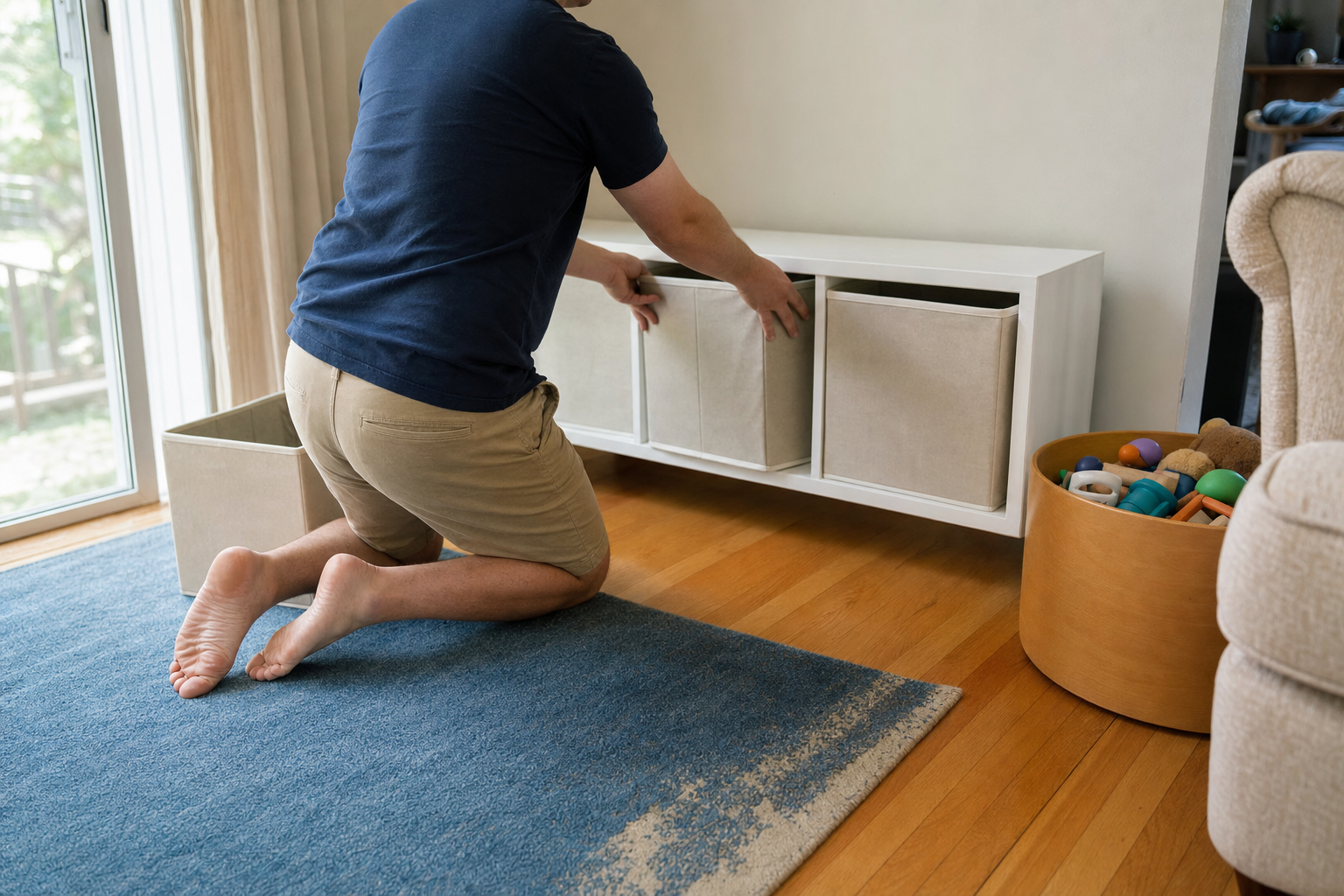
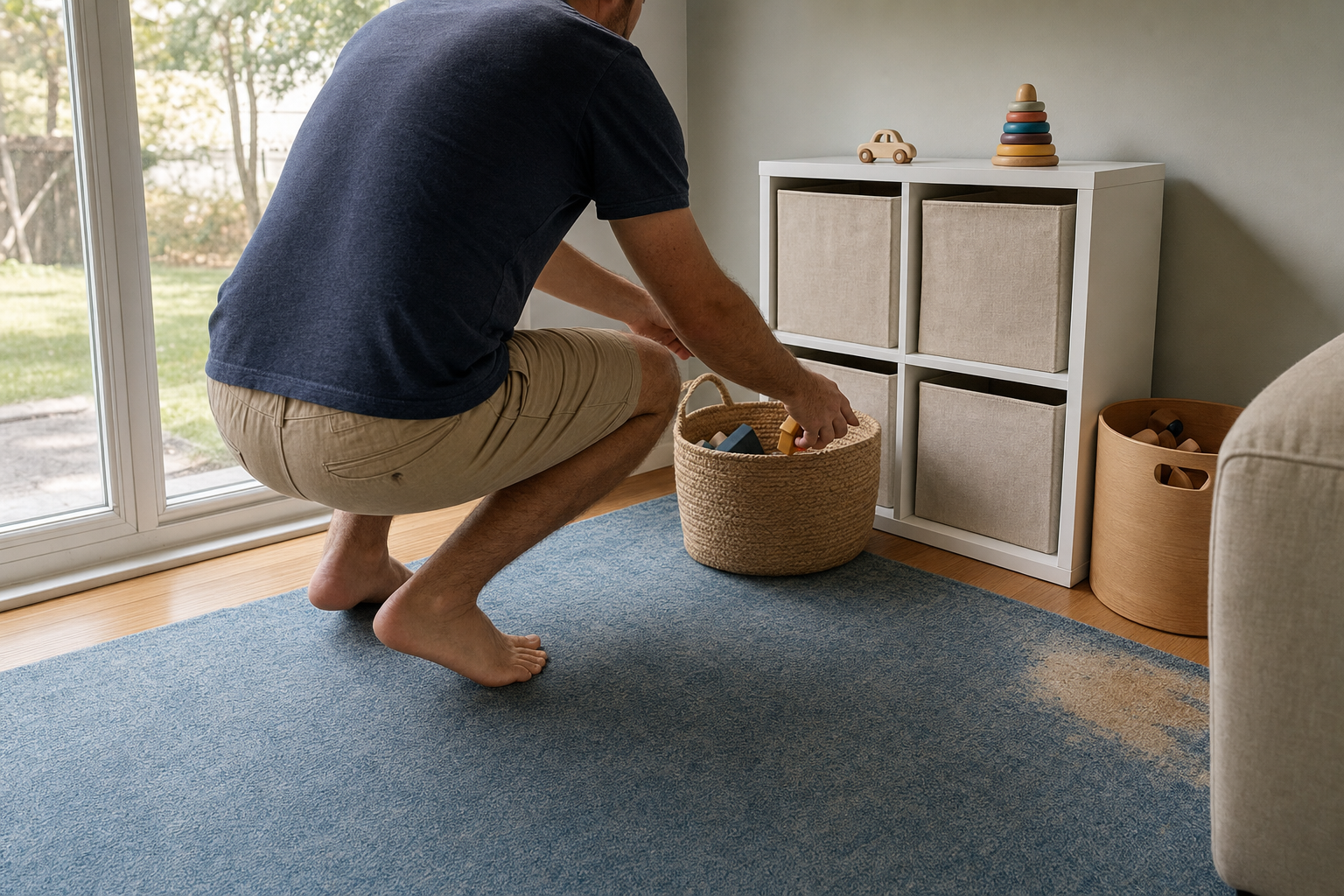
Put the everyday categories in that room in low open baskets a child can reach without help, and move the rest elsewhere. A toy that has to be carried from another room to be played with, and carried back to be put away, will not get put away. Here is roughly how I split it.
| Type of toy | Where it lives | What holds it |
|---|---|---|
| Daily favourites | The room they actually play in | Low open baskets on the floor |
| Blocks and building sets | Same room, on a low shelf | One deep bin with room to spare |
| Art supplies | Near a table, up out of reach | A lidded box brought down for use |
| Big plastic outdoor toys | Garage or patio | Open shelving or a floor zone |
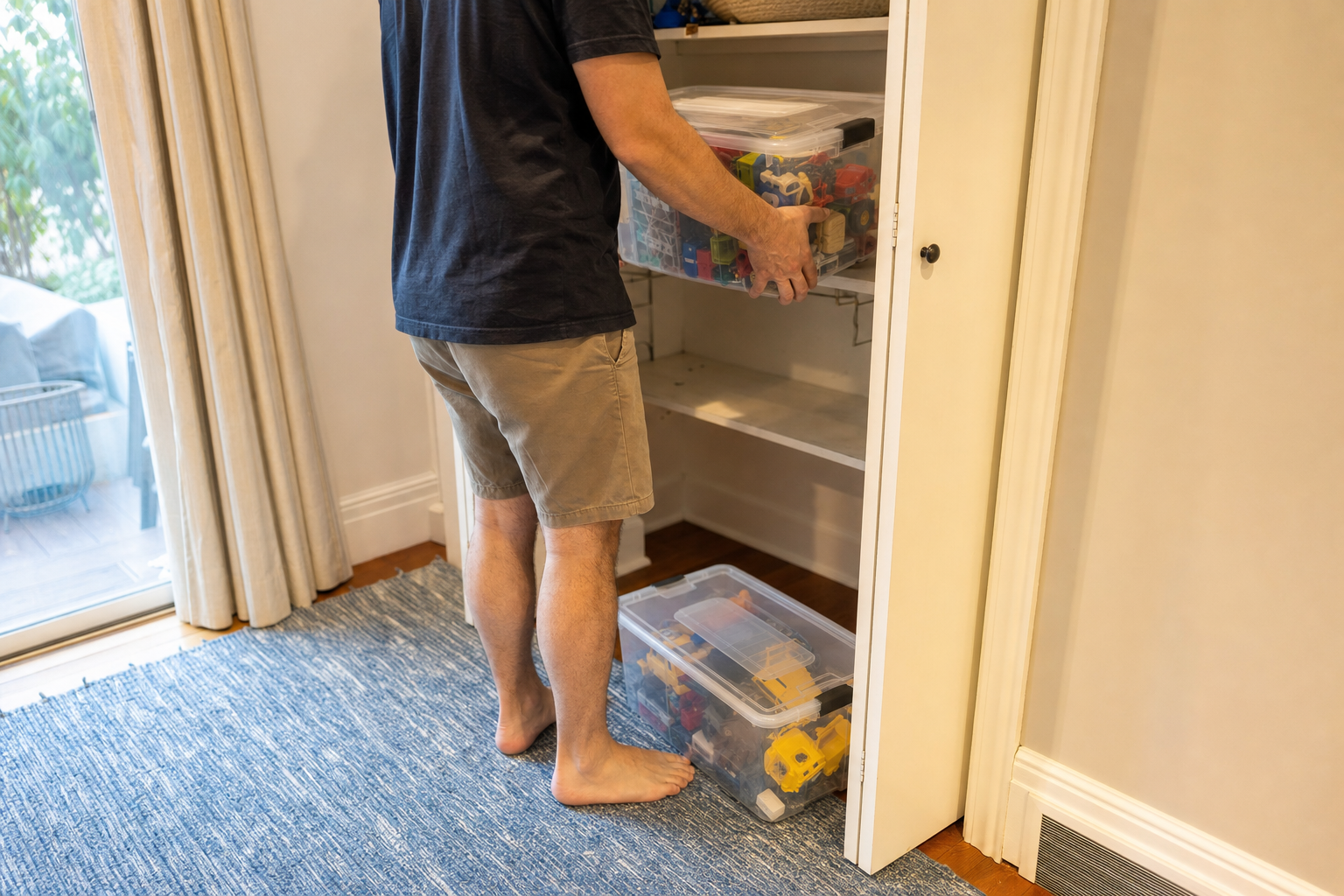
| Rotation and overflow | Garage or a hall closet | Clear lidded totes on a shelf |
| Outgrown and sentimental | Garage, high shelf | One labelled tote, and only one |
Move the overflow out to the garage
Every house has toys that are worth keeping but do not need to be in the living room. Outdoor gear, the big plastic things, the sets a child has grown past but a younger sibling will want, and the rotation stock from the next section. That is a garage job.
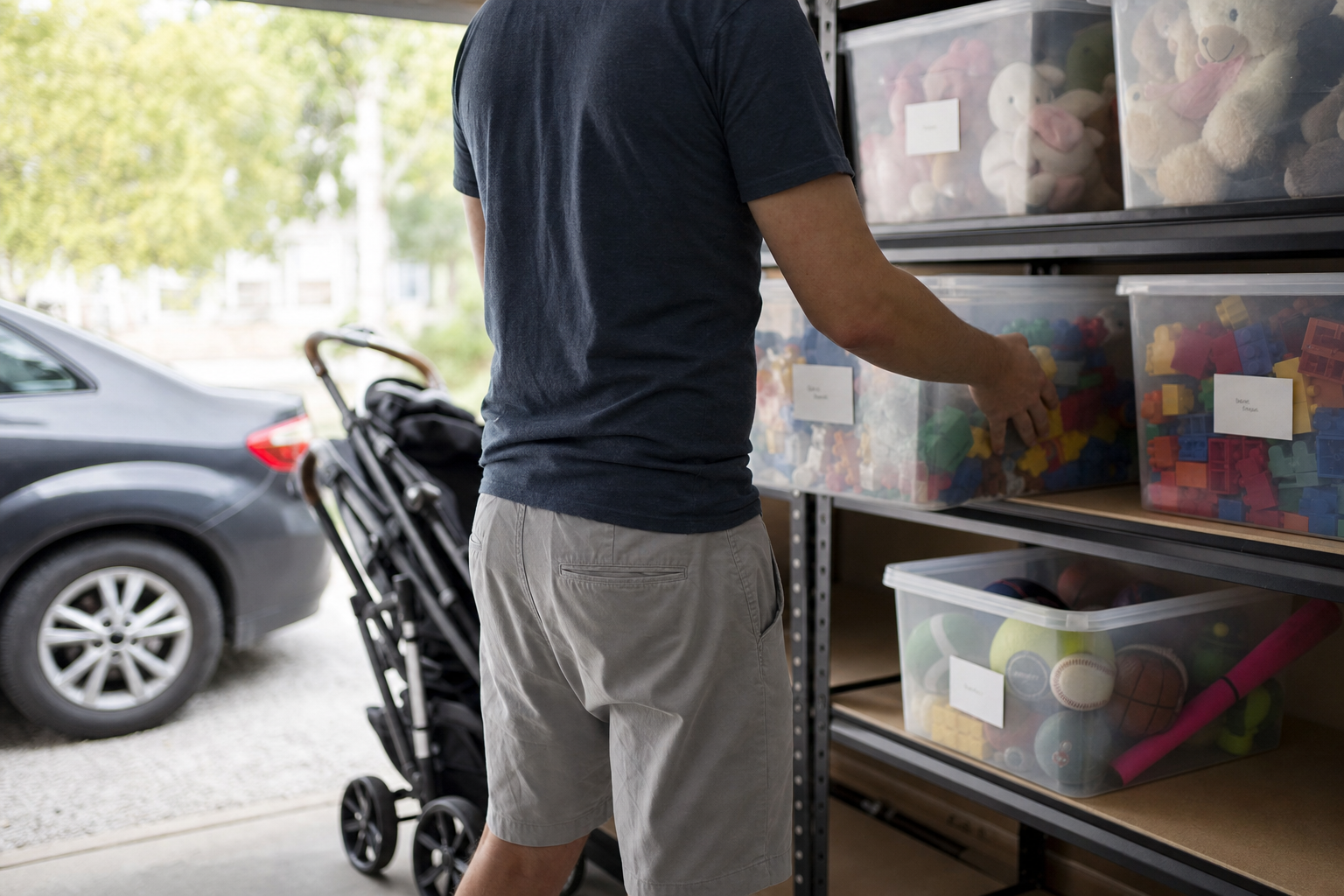
Put them in clear totes on a shelf, one category per tote, and label every tote on the end that faces out. Loose bags on a garage floor are how toys get forgotten and then bought again. Good garage organization is what makes the indoor system possible, because it gives you somewhere real to put the things you are keeping but not using this month.
Rotate a portion of the toys
Take about a third of what is left after the sort, put it in a tote, and store it out of sight. In four to six weeks, swap that tote for one of the categories that has been out.
Two things happen. The room stays at a volume that can genuinely be tidied in five minutes, and the toys that come back out get played with like they are new, because to a small child they nearly are. Parents tell me this is the single change that bought them the most floor space, and it does not require getting rid of anything.
Keep the rotation simple. Take one tote out and put one tote back, on a rough schedule rather than a strict one.
The five minute reset at the end of the day
A toy system does not fail all at once. It drifts, a little each day, until one Saturday it is a project again. A short reset at a fixed time stops the drift.
- Pick a time that already happens every day, like just before dinner or right after bath.
- Set a timer for five minutes and do only the room the toys are in.
- Put things in the right bin rather than any bin, because a wrong bin is what teaches everyone the labels do not matter.
- Stop when the timer stops, even if it is not finished.
- Once a month, check whether any bin is overflowing. If one is, that category needs splitting or thinning, not a bigger bin.
Five minutes a day is enough because you are only ever cleaning up one day of mess. The families who keep their system going are the ones who do the reset on ordinary weekdays when nothing in particular is happening.
If the pile is bigger than a weekend
Some houses are past the point where a Saturday will do it, usually because two or three years of toys have collected and the garage is full as well. That is normal and it is the kind of job we take on.
We start with a free consultation that covers roughly how long the space will take, what products it needs, and what to expect on the day. Then we set an action plan and schedule work days in four to six hour blocks. Some projects finish in one day and most stretch into a few. We do the measuring, sourcing, shopping and installing ourselves, so please do not buy bins ahead of time, and please do not tidy up before we arrive. Seeing it as it really is saves us hours, and nothing goes out of your house without your permission.
We work across Sacramento and Silicon Valley, and our Sacramento location covers what a session with a professional organizer in Sacramento involves. Schedule a free consultation through the contact form and we will get you on the calendar.
For a quicker list of setups rather than the full process, see our toy organization ideas.