

Learning how to organize purses starts with the bags you actually carry and the space they can use. It is easy to fill a closet shelf with a neat row of handbags and discover that your coats no longer hang freely. A useful setup has to leave room for both.
In a shared Sacramento closet, that usually means giving everyday bags an accessible home and storing occasional pieces more compactly. A wall of matching display boxes is optional. Begin with the collection, the shelf dimensions and the way you change bags during an ordinary week.
Quick answer: Group purses by use, give each bag suitable support, and keep the ones you reach for most on an easy-to-access shelf. Measure before choosing storage products. Protect delicate materials according to their care instructions, and leave enough room to remove one bag without shifting the whole row.
Sort purses by use before deciding where they belong
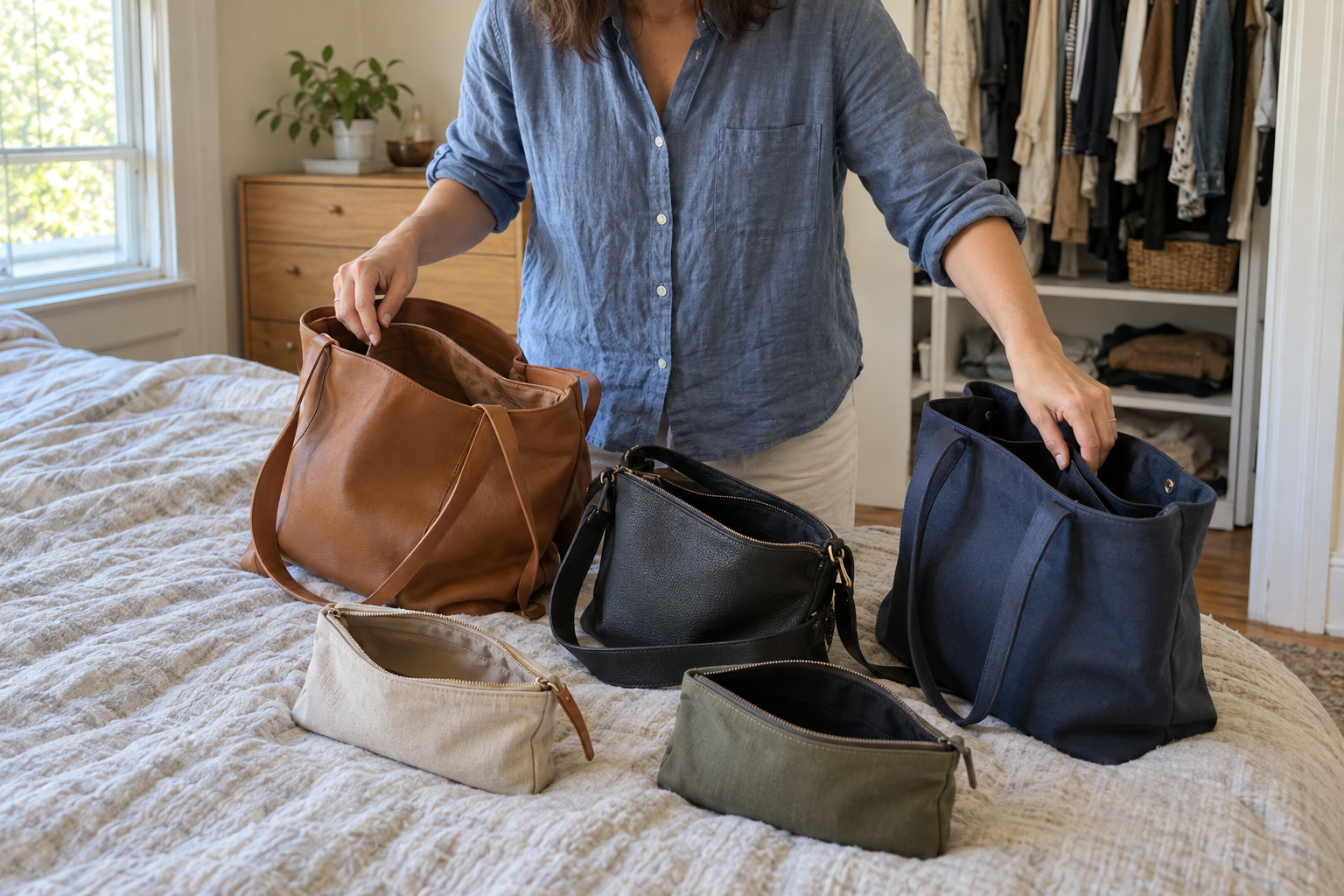
Gather bags from the places they have accumulated: the closet, the entryway, a bedroom chair and any boxes under the bed.
Empty each bag carefully and check its pockets. Separate personal essentials, loose receipts, spare straps and items that belong elsewhere. If a bag has become storage for things you never meant to keep there, clear those out first so the empty bag gets the better shelf.
Make a few practical groups. Everyday bags need the easiest access. Work totes may need more height. Occasion clutches can often share a shallower area. Bags kept for sentimental reasons may need protective storage even if you rarely carry them.
Keep decisions about ownership separate from decisions about arrangement. You may want to keep a bag you do not use often. That is fine. The point is to recognize its role, so your daily bag gets the reachable shelf and the keepsake gets a safe spot nearby.
| Group | Useful storage priority | Detail to check |
|---|---|---|
| Everyday purses | Easy to remove and return | Room around handles and straps |
| Work or larger totes | Enough height and base support | Clearance from hanging clothes |
| Evening bags and clutches | Separate compartments or a shallow area | Delicate clasps and embellishment |
| Seasonal bags | Protected space outside the main reach area | Material-specific care needs |
| Sentimental pieces | Safe storage with a clear location | Whether they need repair or special protection |
Before choosing new storage, count the bags in each group. Five small clutches and five structured totes need very different arrangements. Size and shape, more than the number of bags, decide how much shelf space the collection needs.
If the purse problem is part of a closet that also holds clothing, shoes and household overflow, professional home organization can address the space together. Home Method Co. works with the real problem areas, closet and all.
Fit the arrangement to the closet you have
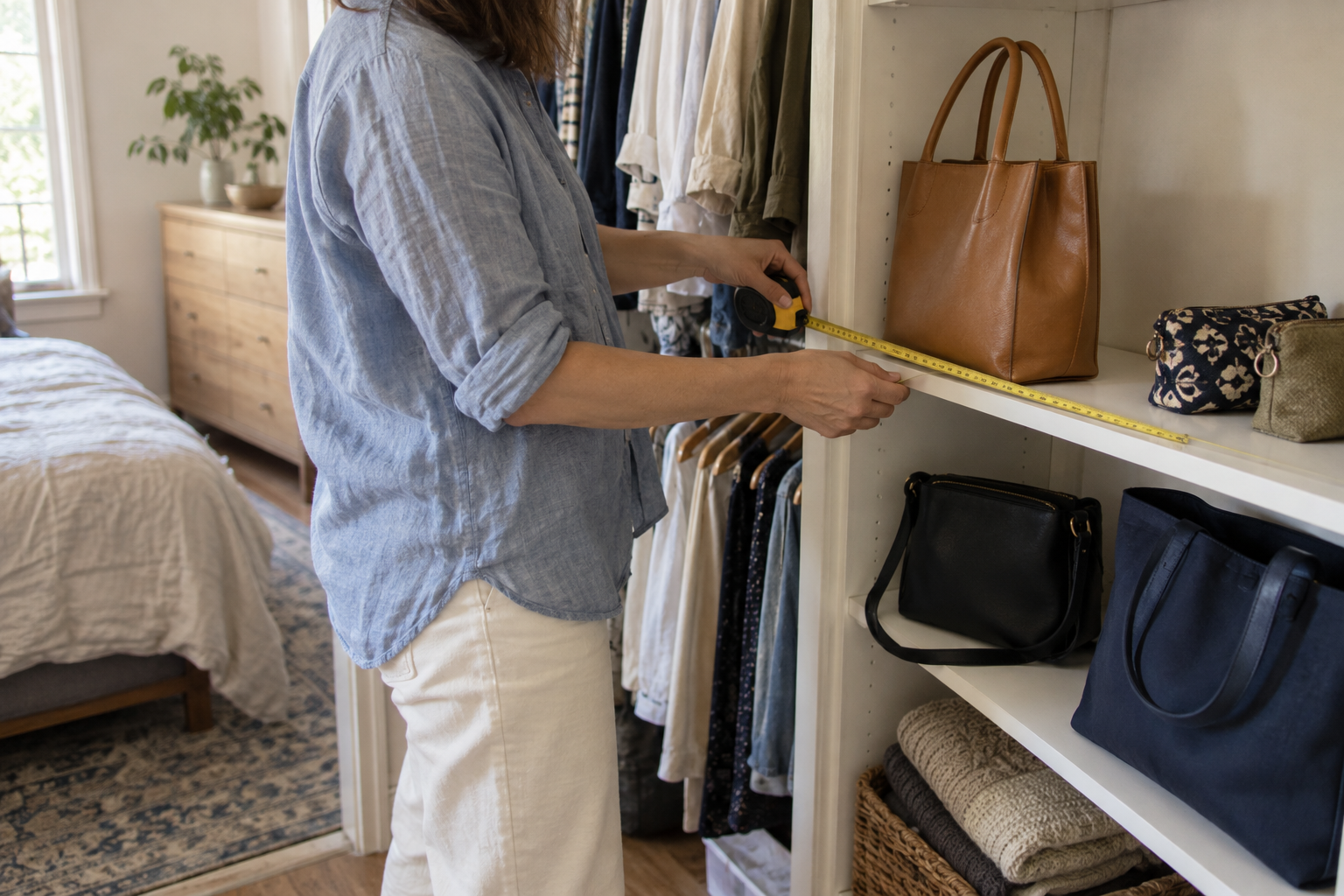
Measure the usable shelf depth, width and clearance above it. Include handles that stand upright and the space needed to lift a bag out. A purse may fit neatly under a shelf and still be awkward to retrieve if you must tip it sideways every time.
Look below the shelf as well. Leave enough room for bags to sit clear of hanging clothes so long garments hang freely. In a shared closet, leave each person's regular items accessible. An arrangement where each person reaches their own things easily is the one that lasts.
Try the layout with what is already available. Stand a structured bag on its base and leave a little room beside it. Place smaller pieces where they are visible without forming a pile. A temporary arrangement lets you check the spacing before committing to dividers, inserts or additional furniture.
Shelf dividers can help separate bags that would otherwise lean into each other. They need to fit the shelf and suit the bags, though. Dividers that squeeze a soft purse or catch a strap add another problem. Clear a path for your hand as well as space for the bag itself.
Save hooks for sturdy totes and canvas bags. Coach's bag-storage guidance advises against hanging leather bags by their straps because the material can stretch over time. Follow the care guidance for each particular bag.
A deep shelf can tempt you to store bags in two rows. That may work for occasional pieces, but it makes everyday access harder. If the back row disappears from view, keep a simple inventory or put less frequently used bags there deliberately. Keep your daily bag in the front row, where you can grab it in one move.
A few practical storage options:
- Shelf dividers to keep bags upright and separated.
- Structured bags stored upright in their dust bags.
- Clutches and small evening bags filed vertically in a drawer or shallow bin, so each one is visible.
- Totes and everyday canvas bags on sturdy hooks, while leather bags stay off hooks, as the Coach guidance above explains.
- Upper shelves for occasional and seasonal bags, and eye level for everyday bags.
Home Method Co. handles measuring and sourcing organizing products as part of its work. That way the dividers and bins fit the shelf from day one.
Protect the shape and material without crowding the shelf
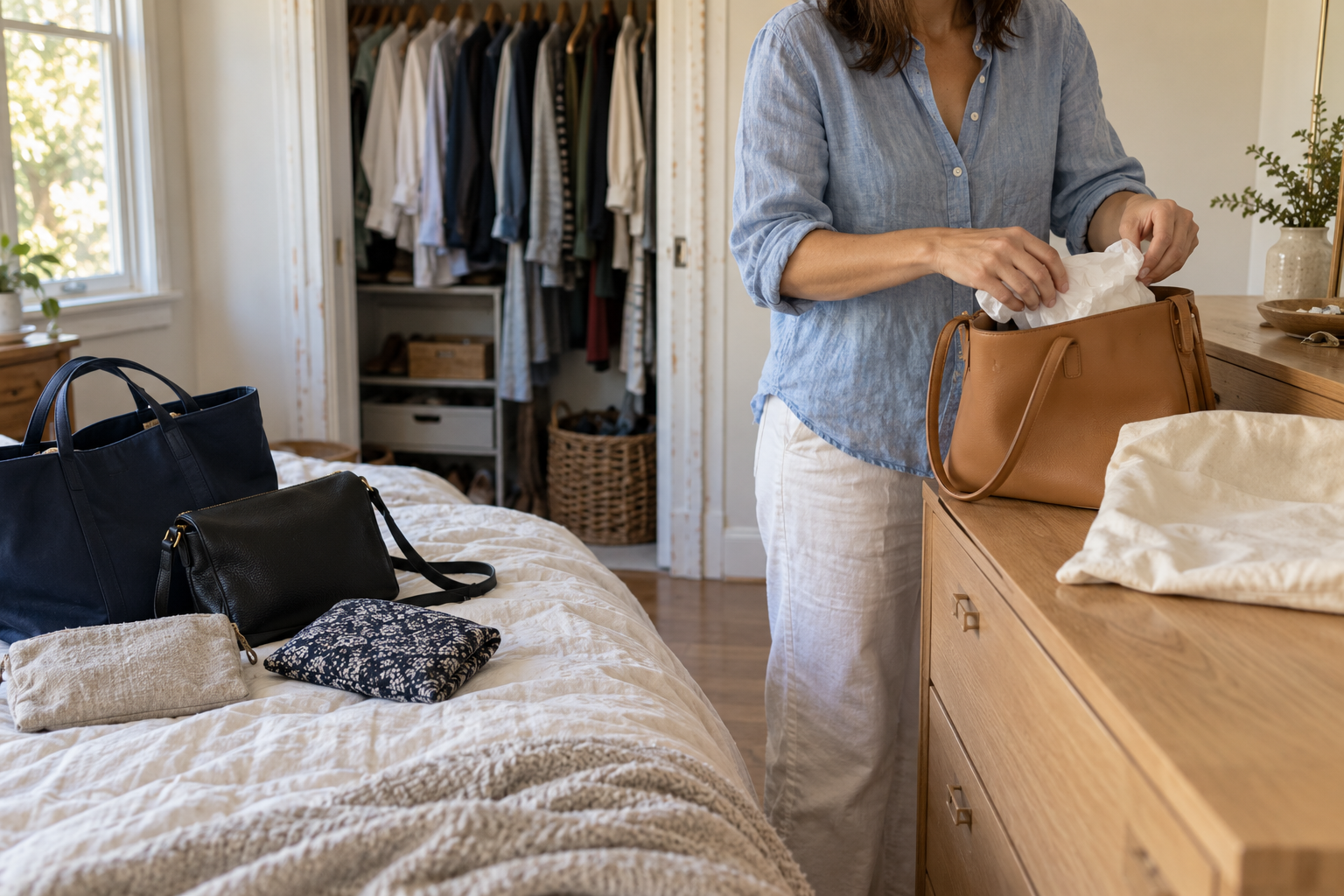
Storage should support a bag in the shape it was designed to hold. Give a structured purse enough room to keep its sides straight, with nothing heavy stacked on top. A soft tote may tolerate a different arrangement, but its own care instructions should guide that decision.
For leather bags, Coach recommends light tissue support, a breathable cloth cover and a cool, dry location away from direct sunlight. It also advises against plastic that can trap moisture. Those are useful starting principles, while specialty materials and finishes may need different care.
Keep straps and detachable parts with the correct bag in a way that does not press hardware into the surface. Fill a purse just enough to hold its shape, without pushing the sides outward. The purpose of support is to preserve the shape, not to use the bag as a container for everything left on the dresser.
- Store bags clean and dry according to their individual care instructions.
- Give structured bases a stable surface.
- Keep sharp or heavy hardware from pressing against neighboring materials.
- Leave delicate decoration clear of anything that could snag it.
- Leave breathing room on each shelf so bags stay uncompressed.
Protective covers can make similar bags hard to identify. You can attach a simple description to the cover or keep a small reference list inside the closet door. Put any label on the storage cover, not directly on a delicate finish. Choose an identification method you will actually use when returning the bag.
If a bag is damaged, set aside a clear decision about repair instead of hiding it at the back of the shelf. Organizing can give it an appropriate place while you decide. Repair it, keep it as it is or decide later; the bag simply has a home in the meantime.
Make switching bags and putting them away easier
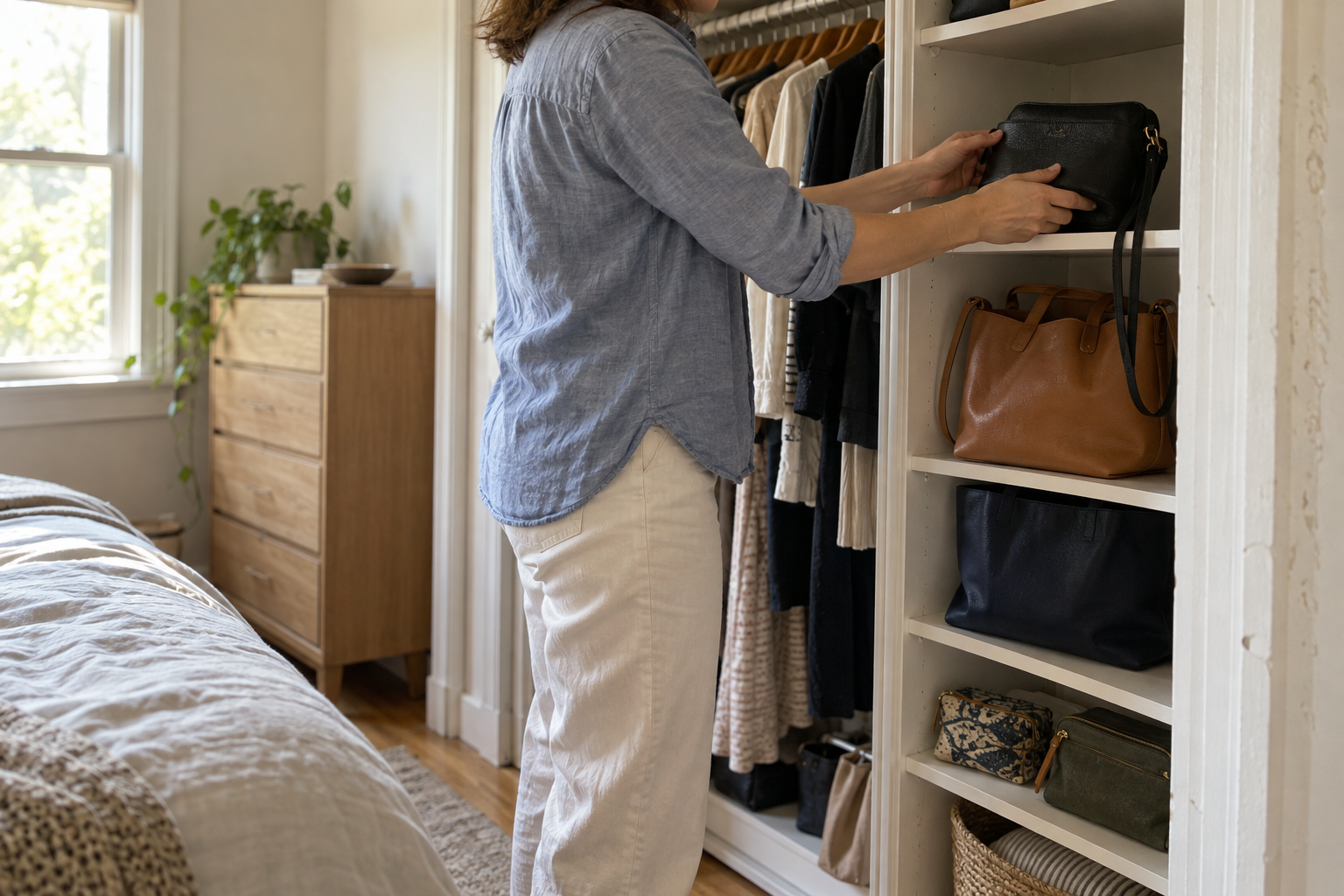
Decide where the bag currently in use will go when you come home. If it always lands on a kitchen chair, give it a secure spot near your usual arrival route and keep the rest of the collection in the closet.
Keep the contents you transfer between bags together. That might be a small pouch for a few essentials, provided it fits the bags you use. Keep the pouch light enough that moving it stays quick. The useful size is the one that holds what you actually transfer.
When changing bags, empty the one you are putting away. This prevents old receipts, snacks or loose items from becoming a surprise months later. Return spare straps to their matching bag and check that everything is dry before storing it.
Leave a little open room in the system. A shelf filled edge to edge is harder to use than one with space to grasp a handle. If a new bag arrives, review the arrangement instead of squeezing it into the closest gap and letting neighboring purses collapse around it.
After a week or two, notice what has stayed on the chair or floor. That gives you useful information. The shelf may be too high, the cover may take too much effort, or the daily bag may need a different location. Adjust the setup around that repeated difficulty instead of assuming you need more willpower.
Get help with a Sacramento closet that needs a broader plan
Purses are often only one part of a crowded closet. A workable arrangement makes room for the rest of your belongings and respects what you want to keep.
For a closer look at planning the whole space, read what happens during a professional closet organizing session in Sacramento.
Home Method Co. offers a free consultation, there is no need to tidy first or buy products, and nothing is discarded without your permission. If you are looking for a professional organizer in Sacramento, the team can help plan storage around the collection, the closet and your everyday routine.