

When a favorite necklace disappears under three others, the problem is usually the arrangement. Learning how to organize jewelry means giving small pieces enough separation that you can see them, pick them up and put them away without untangling a pile first.
A Palo Alto bedroom may have a generous closet and only one shallow drawer for accessories. Another may share the same dresser between two people. Either way, start with the jewelry you use and the place where you get ready. A large new jewelry box can be unnecessary if it makes your daily pieces harder to reach.
Quick answer: Separate jewelry by type and frequency of use, keep pairs together, and give necklaces their own space. Fit storage to the actual drawer or shelf after measuring. Give delicate materials their own protected space rather than one shared open tray.
Give everyday pieces a different place from occasional jewelry
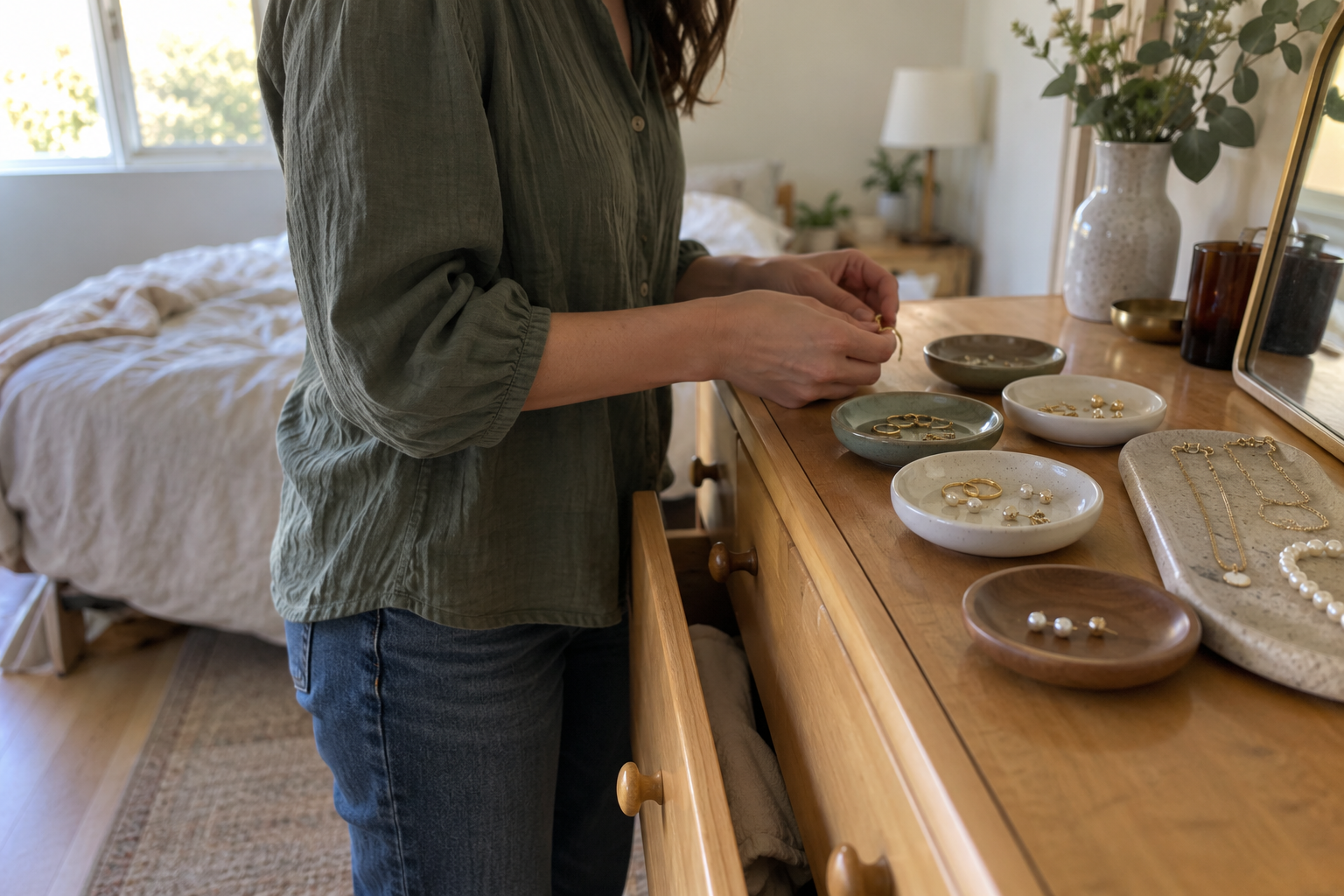
Gather jewelry from the places it has spread: boxes, travel cases, small dishes and dresser drawers. Use a stable surface with good light, away from a sink or an edge where a small piece can disappear. Work in manageable groups if the collection is large.
Start by matching earrings and separating necklaces from bracelets. Put items that need repair in a clearly identified place. A single earring can wait there while you look for its partner, keeping your complete pairs ready to wear.
Next, identify what you reach for during an ordinary week. Those pieces deserve the easiest access. Occasion jewelry can be stored more compactly, provided it is still protected and easy to identify. Sentimental pieces may belong in a separate group even if they are rarely worn.
| Group | Main organizing need | Practical placement |
|---|---|---|
| Everyday earrings and rings | Visible, separate places | Accessible lined compartments |
| Fine necklaces | Space that limits tangling | Individual compartments or suitable necklace storage |
| Larger bracelets | Room without pressure | Compartments sized to the piece |
| Occasional jewelry | Protection and identification | A separate case or drawer section |
| Repairs and missing partners | A clear next decision | One small, designated holding area |
Make daily pieces reachable without moving the occasional ones. If you find yourself lifting three trays to reach the same earrings each morning, change the order and put the most-used layer where it is easiest to reach.
Home Method Co.'s professional organizing works with your belongings and preferences.
Keep packaging decisions separate as well. A presentation box may be useful for one piece and too bulky for another. Retain care information and any records you need, and keep empty packaging out of the most useful drawer so the jewelry itself gets that space.
Choose drawer storage that fits both the space and the collection
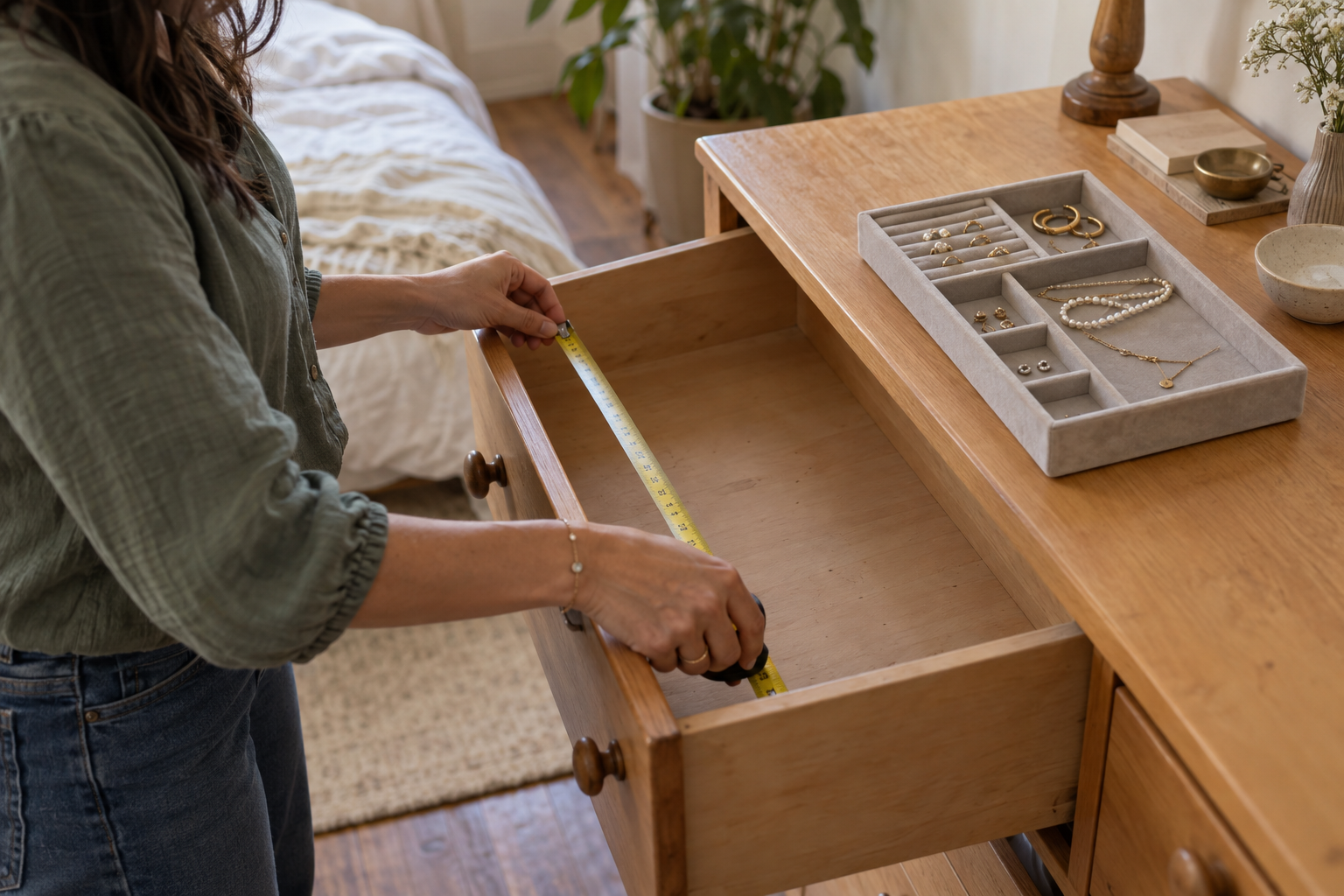
Measure the inside of the drawer, including usable height. A tray that fits the width can still prevent the drawer from closing when a bracelet stands above it. Check the opening and any parts that reduce clearance before choosing an insert.
Look at compartment sizes rather than the total number advertised. Tiny squares may suit studs but leave a large pendant with nowhere to go. A mix of small and longer spaces usually reflects a mixed collection more accurately than a tray divided into identical boxes.
Try a temporary arrangement with suitable containers you already own. Keep pieces separated and protected while testing what belongs where. The goal is to learn the layout before committing to permanent storage. A few days of normal use will reveal awkward corners quickly.
Stacking trays can make good use of depth, but the lower layer should hold pieces you use less often. Check that the trays lift comfortably and that nothing in the upper layer presses onto jewelry below. Leave a little room in each compartment so clasps and chains move freely when the tray lifts.
If you prefer an upright display, consider both protection and access. An open stand may keep a frequently used necklace visible, but it also leaves it exposed to dust and accidental knocks. Choose a display spot out of direct sunlight, and keep delicate materials in closed storage.
Shared storage needs clear boundaries. Separate sections let each person return their own pieces without rearranging the other person's collection. There is no need for both sides to have the same number of compartments. Fit the space to what each person actually uses.
These storage options suit each type of jewelry:
- Earrings: lined grid trays or earring cards and holders that keep pairs together.
- Necklaces: individual hooks or a hanging organizer for chains you wear often, or long separate compartments in a drawer.
- Rings: a ring tray or ring roll with slots.
- Bracelets and watches: a cushioned tray or a wider compartment.
- Travel: a small jewelry roll or case with separate pockets.
If Home Method Co. is helping with the room, the team measures the space and sources inserts that fit the plan.
Protect delicate materials and keep chains separate
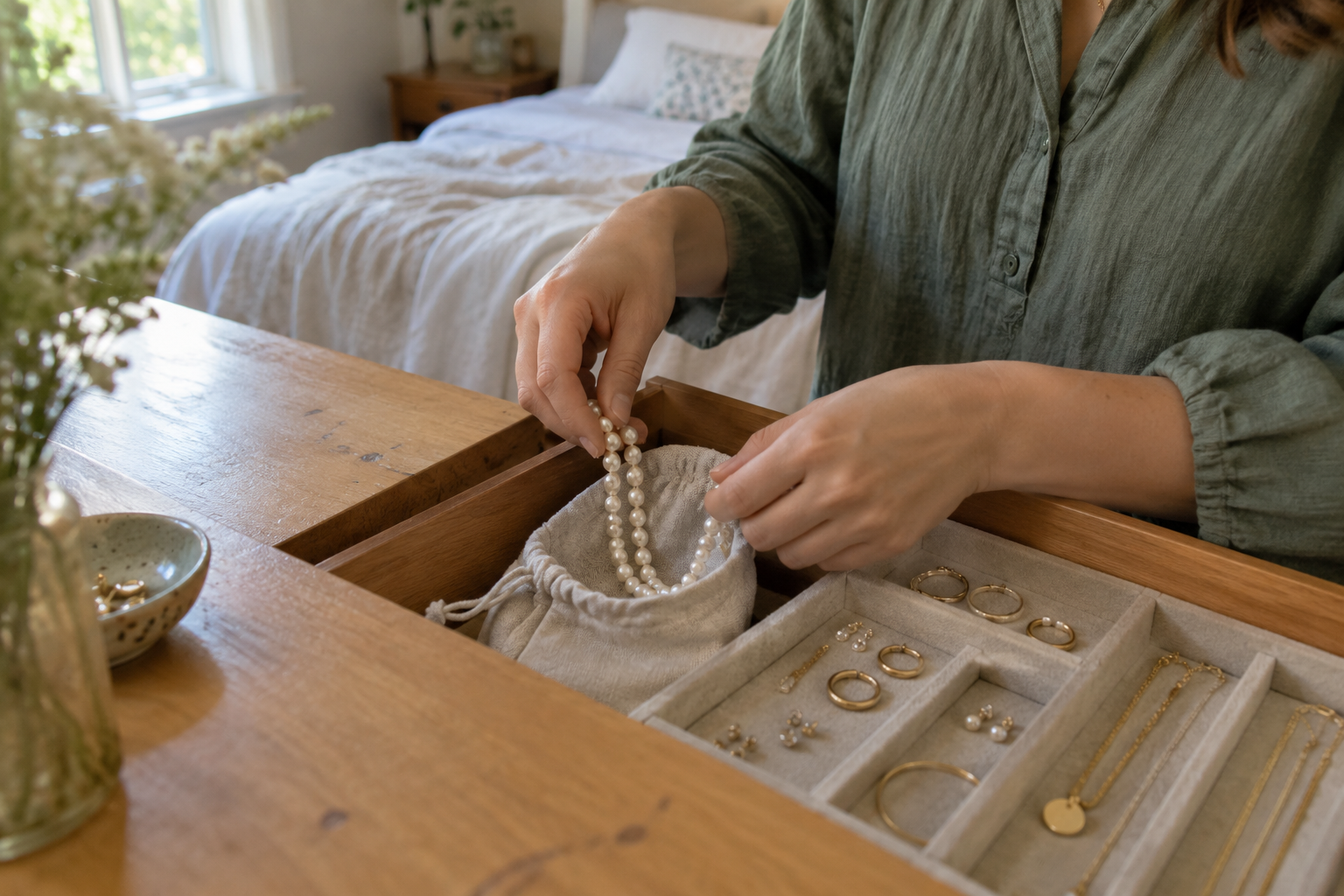
Jewelry can scratch or catch against neighboring pieces. The Gemological Institute of America's care guidance recommends suitable individual protection rather than allowing jewelry to jumble together. Soft-lined spaces or appropriate pouches can help keep pieces apart.
Store necklaces so each can be removed without pulling another chain along with it. Give longer pieces enough room for a loose arrangement. Close clasps where appropriate and lay fine chains loosely rather than winding them tightly. The best position depends on the necklace's construction and care instructions.
Pearls need particular care. GIA's pearl guidance recommends soft storage and avoiding hot, very dry conditions. A storage method recommended for one metal or gemstone may be unsuitable for another, so keep any item-specific guidance with your organizing plan.
- Separate pieces that could scratch or snag each other.
- Give delicate chains their own space.
- Keep jewelry away from household cleaners and cosmetic spills.
- Use storage materials suited to the jewelry's finish and construction.
- Set damaged clasps or loose components aside for professional assessment.
Keep the organizing session about organizing. If you are unsure what a stone, finish or coating is, set the piece aside and check its care guidance before trying any cleaning product. Organizing helps you spot what needs attention, and the care instructions tell you how to treat it.
Also consider who can reach the storage. Small pieces should be kept where young children and pets cannot get to them. Highly valuable items may need a separate secure arrangement that suits the household. Keep valuable pieces in secure storage, even if an open tray feels handier.
Create one reliable place to return what you wore
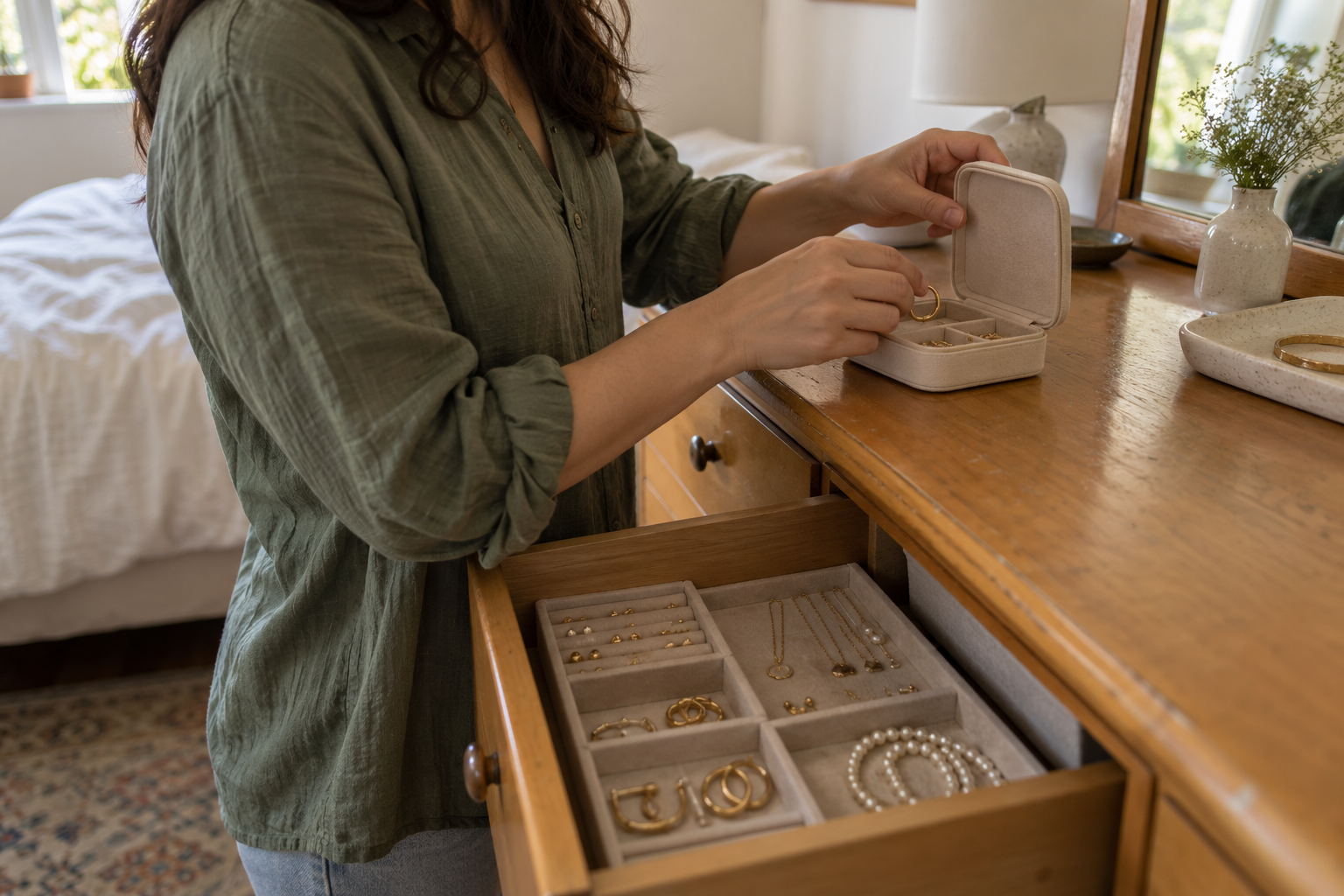
Notice where you remove jewelry at the end of the day. If earrings consistently land beside the bed, a storage plan that depends on walking to another room may be easy to ignore. Bring the daily return point closer to the habit where that can be done safely.
A small, suitable lidded case can hold the few pieces waiting to return to their compartments. Keep it limited to that purpose. When it becomes a second jewelry box with several layers of items, it stops helping you see what needs to be put away.
Make travel cases part of the same routine. After a trip, return pieces to their normal places and check empty compartments before storing the case. Otherwise, a necklace can appear missing for months simply because it remained packed in a rarely opened pouch.
Review the repair area occasionally. Decide whether you want an item repaired, want to continue looking for its pair or prefer to keep it for sentimental reasons. Take the time you need with that decision. Giving it a defined place prevents it from repeatedly entering the everyday selection by accident.
Leave room for additions. If a new bracelet needs space, adjust the arrangement while it is still easy to do. Putting it across several occupied compartments can quickly bring back the tangles and mixed pairs the setup was meant to reduce.
The useful check is simple: can you find the pieces you want, and can you return them without rearranging everything? If one section keeps overflowing, change that section. You may need a different compartment shape rather than more overall storage.
Get help arranging your Palo Alto dressing space
Jewelry storage works best when it fits the surrounding room. Clothing, daily accessories and the surface where you get ready all affect how easily the system is maintained.
Home Method Co. offers home organizing in Silicon Valley, including Palo Alto. Its free consultation is a starting point for planning the space together. There is no need to tidy first or buy organizers, nothing is removed without your permission, and the team assesses the real storage needs before choosing products.