

The best backpack storage ideas start with where the bags actually land. If everyone comes through the kitchen door, a beautiful row of hooks by the front entrance will probably stay empty. Choose a reachable spot on the route your family really takes, then give everything inside the bag somewhere to go.
A backpack area needs to handle more than the backpack. Lunch containers need to get to the kitchen. Papers need an adult's attention. Shoes and sports equipment need separate places. Home Method Co.'s mudroom storage ideas can help you think about that wider entry area. Here, the job is narrower: make the school bag easy to empty, put away and refill.
How to Set Up Backpack Storage in Five Steps
If you only have a minute, here’s the plan. The sections below fill in the details.
- Watch where the bag lands for a few days.
- Give each bag one easy place to return to.
- Give lunch boxes, papers and shoes their own spots.
- Set out tomorrow’s things the night before.
- Try it for a school week, then adjust one thing at a time.
Watch the after-school routine before you buy anything
For a few days, notice where the bag stops and why. Is the hook too high? Is a cupboard door awkward to open while holding a lunch box? Does the bag end up on a chair because the hallway is already full of shoes? The answer tells you what needs to change.
Ask the person who uses the bag to show you the problem. A younger child may manage a low open cubby more easily than a narrow hook hidden behind a coat. A teenager carrying a larger bag may need more room than the storage unit provides. Plan for the real bag and the real person, not the one in the product photo.
Keep the walking route clear. A basket that sticks out into a doorway can create a new problem even if every bag fits neatly. Try the spot with a bag in place and the nearby doors open before you decide it works.
Give each bag one easy place to return to
A single assigned spot is easier to use than several possible destinations. Which one suits you depends on your space:
- Hooks: a sturdy row at the right height for the person using them. Follow the installation instructions and check the load rating, because a full bag is often much heavier than it looks.
- An open cubby or shelf: good for younger children, who can reach it without help.
- A bench with storage: handy if the entry has room, since it gives you a seat, a shoe spot and a place for the bag in one.
- A section of an existing closet: enough on its own if you don’t have a mudroom.
- No-drill options: over-the-door hooks or a freestanding rack can work for renters. If you add a tall freestanding unit, secure it to the wall following the manufacturer’s instructions.
Leave enough room to lift the bag off without removing another person's coat. If several people share the area, allocate space to each person's current gear rather than forcing equal compartments that do not fit. A big sports bag and a small school backpack need different amounts of room.
You do not have to build a mudroom to start. A bit of closet or a clear shelf near the usual entrance can be enough. Start with what is available. Once the family has used it for a while, you can decide whether extra storage would solve a specific problem.
Give the contents their own destinations
The bag's parking space and the contents' destinations should be related, but they do not all belong in one basket. Food containers need a washing routine. Papers need a place where they will be read. Keeping these tasks visible helps prevent yesterday's lunch and tomorrow's permission slip from ending up in the same pile.
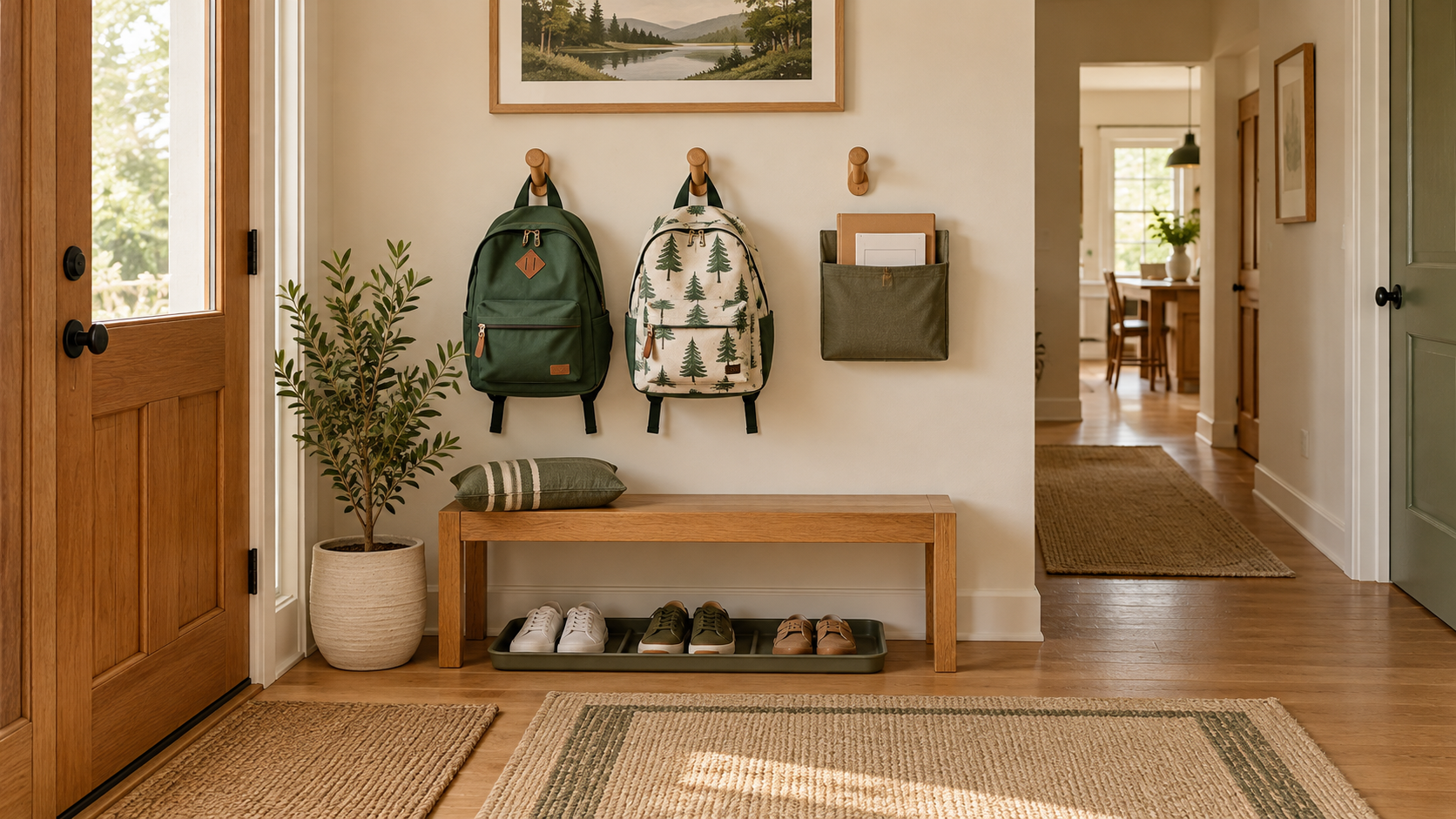
Here’s a simple way to split it up:
- Backpack: one reachable home near the entrance your family use.
- Lunch box and bottle: a clear route to the kitchen for emptying and cleaning.
- Papers needing a response: one small tray in an adult's normal line of sight.
- Shoes: a separate place that does not block bag access.
Keep the paper tray small enough to review easily. It should hold current action items, not become an archive for the school year. Once a paper is handled, file, return or discard it as appropriate. Leave the tray empty for tomorrow.
Make tomorrow's things visible tonight
Give packed items a clear place to wait, such as the bag’s own cubby or a small shelf beside it. The location matters more than an elaborate label system. Everyone should know which items are ready and which still need attention.
Keep occasional equipment from taking over everyday storage. A weekend sports bag can live elsewhere until it’s needed. If everything the family owns stays by the door, the daily items become harder to reach. Make room for the next normal day, then bring in special equipment when the schedule calls for it.
Try a short evening check that suits the household. Return signed papers, check the next day's activity and put the ready bag in its assigned place. This is a suggested household habit, not a promise that one storage product will eliminate rushed mornings.
Test the arrangement before making it permanent
Use the setup for a school week. Look at what still ends up on the floor or table. Those items are feedback. A bottle may need a different return spot. A hook may be behind a door swing. A younger child may need an adult to help with the emptying step even when the storage is within reach.
Change one thing at a time so you can tell what helped. The goal is a short, understandable routine that the people using it can actually keep up.
Want the entry area planned around your family’s routine? Home Method Co.’s professional home organization team can help with the whole space, not just the bag spot. You don’t need to tidy, sort or buy bins first. The team does the measuring, sourcing and shopping, and nothing is thrown away without your permission. Show them the space as it is. That’s how Home Method Co. works, and the pile of bags by your door tells them exactly what the new setup needs to solve.
Schedule a free consultation to talk it through, or call (916) 471-4323. The team helps families in Sacramento, San Jose, Palo Alto and across Silicon Valley.